Showing posts with label Food. Show all posts

Thursday, June 23, 2016

Indonesian Traditional Food "Rendang"

0 comments
http://www.indoculture.tk/

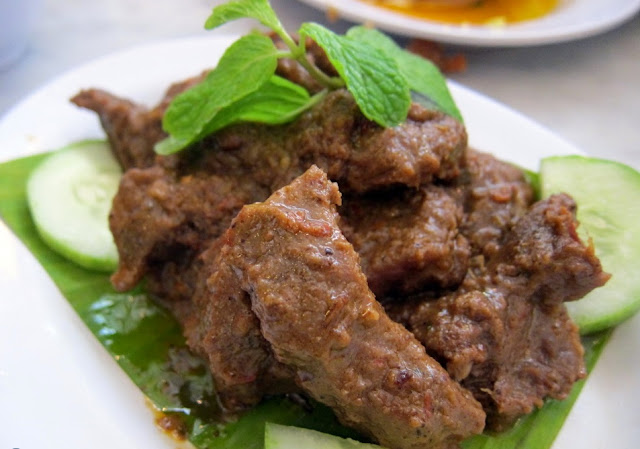
Beef Rendang

Rendang is one of the many traditional Indonesian food, rendang derived from western Sumatra (Padang) or in the native language of the Padang/minang called Randang.

The natives minang has many traditional foods are usually the hallmark of food derived from western Sumatra island has a spicy flavor and saltier than other areas in the Indonesian food.
One of them rendang or randang, the food is usually made of beef mixed with choice of potato, but you can make chicken rendang, tuna rendang etc..
http://www.indoculture.tk/
TUNA RENDANG
If you're in Indonesia will see many typical restaurants Padang/minang and in the restaurant you will definitely find Rendang, no wonder as rendang is the main dish for the Padang/minang.


Ingredients to make rendang:

  • Beef choice pieces the size according to your tastes.
  • Old palm fruits for processing into coconut milk.
  • Red onion
  • Garlic
  • Red chili pepper
  • Ginger
  • Galangal
  • Pepper powder
  • Citronella
  • Asam kandis (Garcinia xanthochymus)
  • Anise
  • Lime leaves
  • Bay leaf
  • Turmeric leaf
  • Salt
  • Sugar
When the above material has been collected, then you can begin the process of making the beef rendang.
http://www.indoculture.tk/
DRY RENDANG

How to make rendang so tasty and tender:

http://www.indoculture.tk/
RENDANG SERVED WITH RICE
  1. Finely mashed onion, garlic, ginger, chili and galangal.
  2. Boil enough water then enter the spice that has been pounded with meat that has been cut off, let it allow the flavors to seep into the meat and a bit dry.
  3. Put coconut milk, pepper, lemongrass, tamarind kandis, anise, lime leaves, bay leaf, salt and sugar after mixing evenly then input turmeric that has been torn beforehand.
  4. Reduce the heat after boiling coconut milk and remove the oil.
  5. Continue to mix evenly and do not adhere wait to look dry and discolored.
  6. As it dries rendang ready to be served.

Additional tips:

So that the meat is more tender:


  • Before the poached with spices can be beaten with a hard object.
  • Meat marinated with pineapple cut into pieces.
  • Stir in coconut milk with caution so as not to break and relieve.


  • Read More Interesting Articles:

    "TEMPEH" Indonesian Traditional Food

    Friday, May 20, 2016

    "TEMPEH" Indonesian Traditional Food

    0 comments
    www.indoculture.tk

    "TEMPE" Indonesian Traditional Food


    Tempeh or Tempe (Java) is a traditional food Indonesia produced from fermented soy beans, this food has existed since many centuries ago is not clear when the actual food tempe was first made, but until now the people of Indonesia are still many consuming tempe, not only the people of Indonesia even the European community and other countries are now participating consuming tempe, tempe Japanese example is a second meal after the fish, tempeh even had the nickname "magic food" outside Indonesia.

    Making Tempe


    Indonesian tempe original consists of multiple processes :

    1. Boiling : This process makes soybean seeds in addition to software and functions as well as the process of hydration, hydration is intended soybean roots can absorb the water with a maximum, in conditions of soft soy beans can more easily absorb the acid in the process the soaking and pickling later.
    2. Paring : The stripping step is a step in which the mycelium of fungi that can easily absorb into soy, without any obstacles from the skin of soybean, stripping the skin's way of soybeans there are various kinds of hand, trampled and machinery.
    3. Soaking and Pickling : The next step is finding the right acidity by soaking soybeans and allow for fermentation occurs fungal growth resulting lactic acid.
    4. Washing : This is the last washing step to remove bacteria or impurities that exist in soy because it will slow even inhibit the growth of fungi.
    5. Inoculation With Yeast : called inoculation is the addition of inoculum example laru / yeast tempeh, In Indonesian itself using traditional materials present, but outside of Indonesia mostly use cultured R. oligosporus pure.
    6. Packing : This packing step depends on the maker in Indonesia themselves mostly banana leaves, but not a few who use plastic, perhaps most importantly adalan same oxygen can still enter, because one of the conditions that can develop tempeh mold is to be exposed to oxygen.
    7. Fermentation : To make good tempeh after completion wrapped fermented soy beans last for 18-36 hours At temperatures between 20 ° C to 37 ° C, in this way will produce tempeh with better quality for natural walking, other things that use a lot inokulun plus high temperatures, is much faster, but the results are not too good.

    www.indoculture.tk

    Fermentation Soy Beans

    The Nutrition Ingredients Found In Tempe

    Tempe is known to contain many nutrients that some of them are :

    Unsaturated fatty acids

    • oleic acid
    • linoleic acid

    Vitamin

    • Vitamin B Complex (water-soluble)
    • B1(thiamine), B2(riboflavin), Pantothenic acid, Nicotinic Acid(niacin), Vitamin B6(pyridoxine) and B12(cyanocobalamin)
    • Vitamin ADE, and K (fat-soluble)
    The only plant-based foods that have vitamin B12.

    Mineral/100mg Tempe

    • Iron : 9,39
    • Copper : 2,87
    • Zinc : 8,05
    • Calcium
    • Magnesium

    Antioxidants

    • Isoflavones

    Some type Tempe Typical Indonesian cuisine :

    • Tempe Goreng (Fried tempe)
    www.indoculture.tk
    Tempe Goreng (Fried tempe)
    • Tempe Goreng Tepung (Fried tempe with flour)
    www.indoculture.tk
    Tempe Goreng Tepung (Fried tempe with flour)

    • Sambal Goreng Tempe Kering (Fried Tempe With Fried Sausage)
    www.indoculture.tk
    Sambal Goreng Tempe Kering (Fried Tempe With Fried Sausage)

    • Tempe Bacem (Wet Tempe Herbs and Spices With Ketchup Dominant)

    www.indoculture.tk
    Tempe Bacem

    And there are many other types of tempeh dishes, if you want to try maybe you can find Indonesian food in the country you are.